For much of my life, I have lived between two cultures.
I am practical in the very North American sense: I like things that work, solve problems, and move us forward. But I have also spent more than twenty years living in France, where food is not simply fuel. It is culture, pleasure, craft, memory and connection.
In France, people can spend hours at the table discussing origin, preparation, seasonality—even whether the cheese is at the right temperature. Food is not a task to complete. It is part of living well.
That contrast has shaped both the company I founded and me.
Reimagine yourself
For years, I saw a tension in North America between indulgence and health.
Pleasure often came with guilt. Health came with rules: eat this, avoid that, count this, supplement with that. Wellness could feel like one more job—and one you never quite mastered.
My own reimagining began at 53, with a discovery that was as humbling as it was enlightening.
I had started my career as a publisher in France. After our family moved from Paris to Hong Kong, I drew on my science background to address significant health challenges affecting two of our three children. That experience led me to become an educator, helping others understand the connections between food and health.
Several years later, life had regained its balance—and I had become less vigilant. Small health issues crept into our family: digestive problems for me, inflammation for my husband, Olivier, and sugar cravings for our children. Then I discovered that my blood sugar was out of balance—ironically, one of the same issues affecting so many North Americans.
How had this happened? It was embarrassing. I taught people about these issues. I knew the science.
But that was precisely the lesson: it can happen remarkably easily.
I turned to my friend Dr. Jean-François Lesgards, a leading expert in nutrition, health and inflammatory disease, and asked what “magic bullet” might help us that my French family would actually enjoy. Taste was not negotiable, and everyone would turn up their noses at supplements.
Jean-François suggested a specific, difficult-to-source whey protein concentrate. I expected something functional but unappealing: chalky, heavy, clinical, and meant for building muscle.
Instead, I discovered something creamy, delicious and surprisingly versatile in the kitchen. It was relatively low in lactose and offered science-backed nutritional benefits extending well beyond bones and muscles.
That experience changed my understanding of healthy food. Why should something good for us have to feel medicinal? Why should pleasure and function sit on opposite sides of the table?
I began imagining a different relationship between food and health, particularly for women over 45, who often do not consume enough protein. What if food could help us look, feel, perform and age well while still delivering the pleasure of great cooking?
This was before COVID, before GLP-1 medications entered the mainstream and before the market was ready. But it became the foundation of Protelicious.
The goal was never to persuade people to tolerate healthy food. It was to create healthy food they would genuinely desire.
Own who you are
The second part of my journey was learning not to dilute the contradiction in my identity, but to use it.
I am North American and European in the way I think about food. I believe in science, measurement, and practical solutions. But I also believe that food is a disciplined art.
It should be beautiful. It should taste wonderful. It should create anticipation and bring people together.
For me, longevity should not mean spending the rest of your life negotiating with your plate. It should bring peace of mind. I want to know that I am giving my body what it needs without searching endlessly through powders, pills, and complicated protocols. Nutrition should fit naturally into life.
That is what I want to bring to the North American table: the rigor of nutrition science combined with the emotional intelligence of European food culture.
Owning that point of view was important because founders face enormous pressure to fit into an existing box.
Are you a supplement company? An ice cream company? A wellness company? A healthcare company?
Eventually, I realized our strength wasn’t in choosing among those identities. It was in building a bridge between them.
Act on what’s next
When I founded Protelicious in 2017, the world looked very different. Protein was still associated primarily with gyms, shaker bottles and bodybuilding—not healthy aging, metabolic health, or women’s wellness.
We climbed many mountains while communicating a message that now feels more evident: protein is not only about building muscle. It is fundamental to how we age, recover, and remain strong. Quality, quantity and frequency all matter.
The world has begun to catch up, but the journey has not become easier. Founders rarely travel in a straight line. Products, channels and markets change.
This year, we discovered almost by accident that our proprietary ice cream matrix worked exceptionally well in a commercial soft-serve machine. Suddenly, we were looking at an entirely new route to market.
Acting on what is next does not mean chasing every opportunity. It means staying close enough to your purpose to recognize the right one when it appears.
You need conviction, but you also need curiosity.
Reassess your relationships
Perhaps the most important lesson has been about people.
Early in the company’s development, on the advice of my dear friend Alice Lopin, we defined our values. What initially felt like a branding exercise became something far more consequential.
Our values became a filter. They helped us decide whom to hire, work with and partner with—and sometimes whom to walk away from.
When relationships succeeded, there was almost always alignment beneath the surface. When they failed, I could often identify an early signal we had ignored. We had focused on capability, opportunity, or urgency instead of shared values.
Founders are constantly told to build networks. I would add: build relationships with people whose definition of success is compatible with yours.
That does not mean surrounding yourself with people who always agree. The best advisors, investors, employees, and partners challenge you—but from a shared foundation.
ROAR
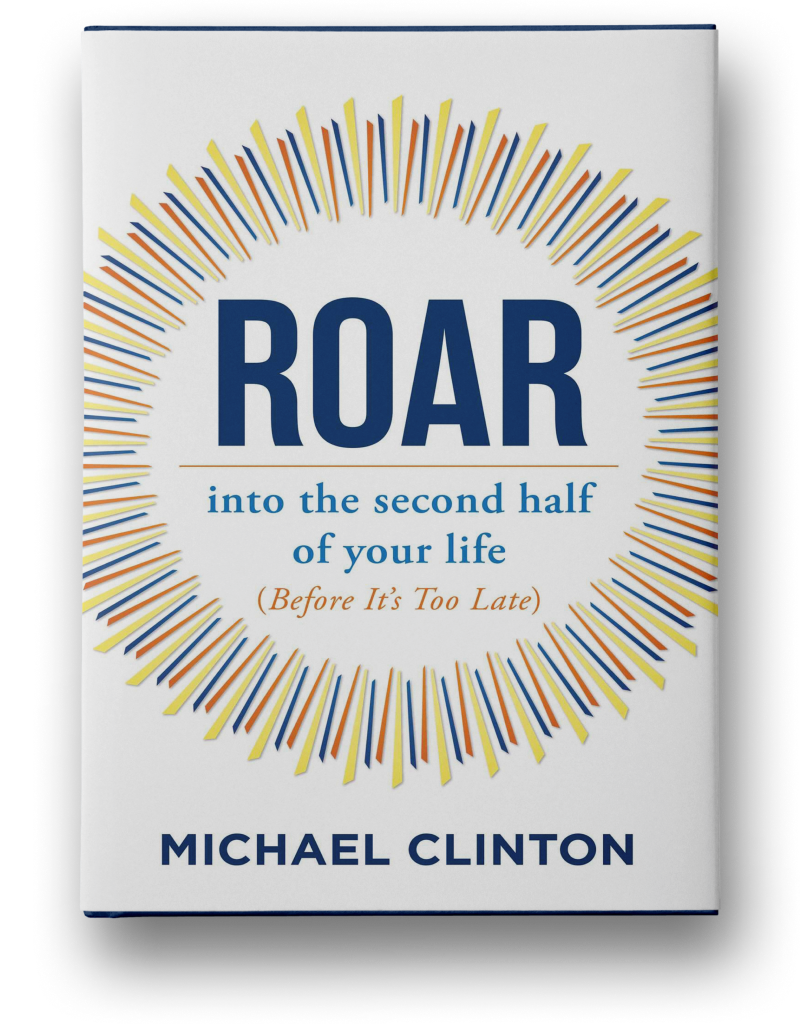
Looking back, the ROAR framework feels remarkably close to the way Protelicious has evolved.
Reimagine yourself. Allow a new possibility to emerge, even when it challenges the category you thought you belonged to.
Own who you are. The contradictions in your background may be exactly where your differentiation lives.
Act on what’s next. Stay rooted in purpose, but open enough to recognize when the market offers a new path forward.
Reassess your relationships. Values are not decorative words on a wall. They are decision-making tools.
Entrepreneurship has taught me that reinvention is rarely one dramatic moment. It happens through hundreds of small decisions.
What do we believe? What will we change? What will we refuse to compromise? Who do we want beside us?
For me, the answer returns to the idea that began at our kitchen table:
Health and pleasure were never meant to be enemies.
The future I want to help build is one where taking care of yourself feels less like work and more like living well.