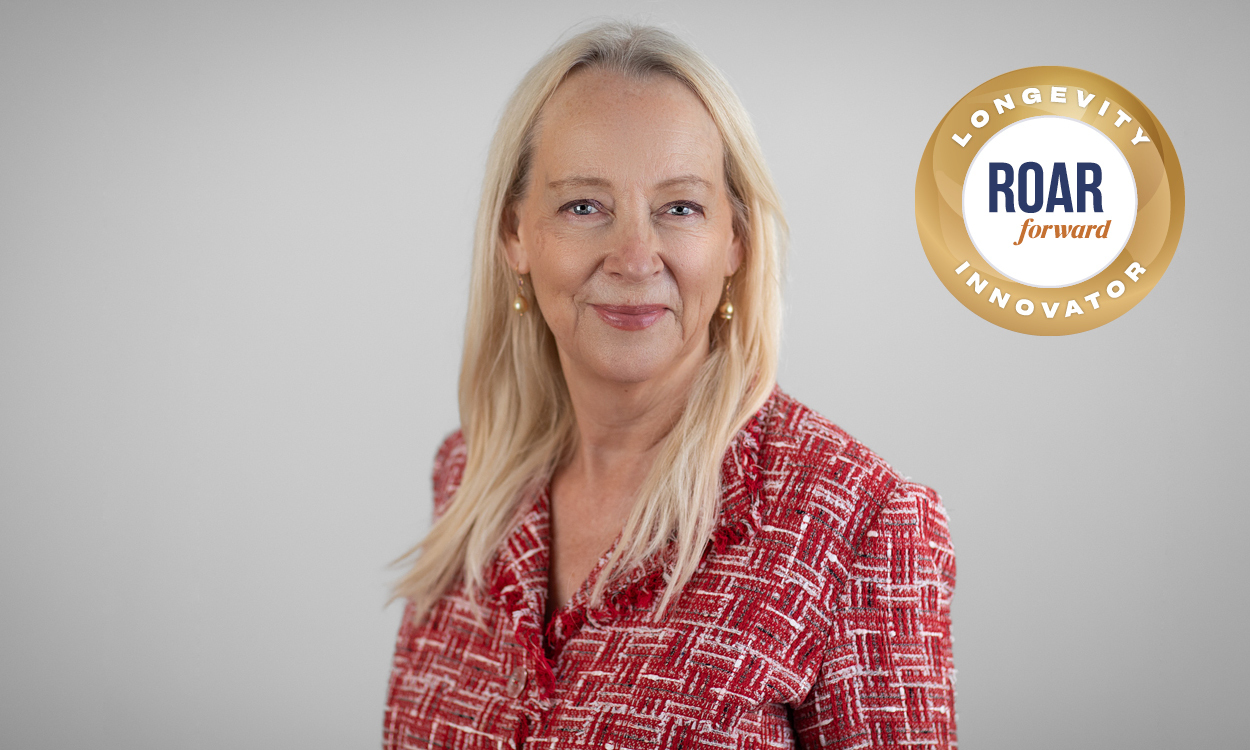
Lynda Gratton is one of the original visionaries who foresaw, more than 10 years ago, that our increasing longevity would change life’s arc – from career, identity, and life stages to transitions, consumption, and retirement. She is one of the New Longevity’s earliest innovators.
A trained psychologist, Gratton is a Professor of Management Practice at London Business School. She is the founder of HSM Advisory, a research and advisory group focused on leadership, workplace, and the future of work. And she is a prolific author, writing more than a dozen books, including The 100-Year Life (with Andrew Scott), Redesigning Work, and The Shift: The Future of Work is Already Here.
This autumn, Gratton will achieve two new and important milestones. In September, her newest book, Living the 100-Year Life, will be published. Additionally, she and Herminia Ibarra will launch the SARI Foundation Institute for Work, Careers and Longevity at The London Business School as its Academic Co-Directors.
We spoke to Lynda as she was wrapping up her pre-release book publicity and putting the finishing touches on many of her new book’s digital extensions.
It’s a big year for you with the launch of the SARI Foundation Institute for Work, Careers and Longevity at The London Business School and the launch of your book Living the 100-Year Life. Let’s start with the book. With the immense success of The 100-Year Life, did you feel pressure around writing this new book?
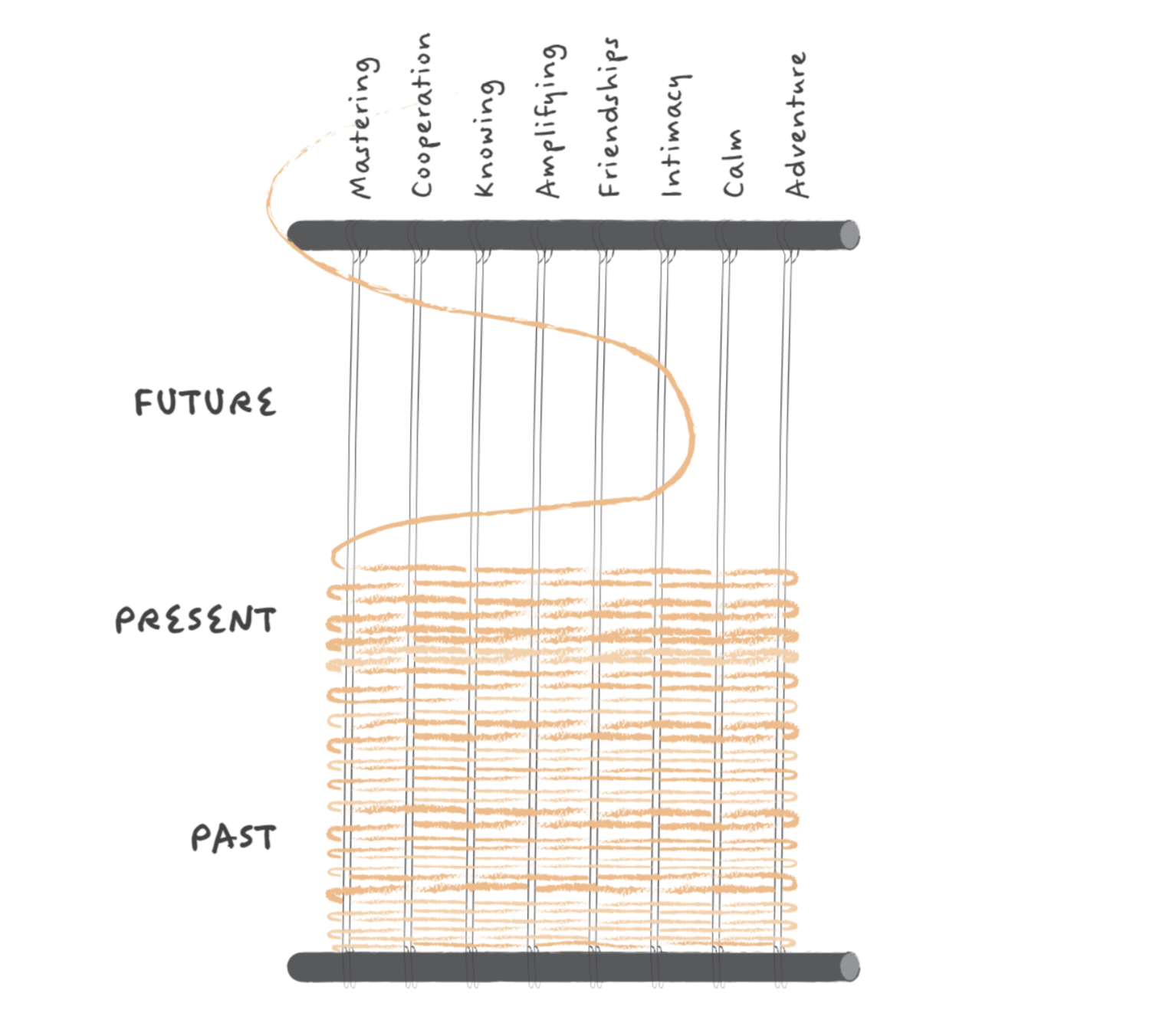
It started with a year of me writing stories of my own life. And then bit by bit, the threads started to [develop], and the weave started to emerge. Within a year, I said to my husband, “I think I might be writing a book.” It never really was set up as the next The 100-Year Life — it was a contemplation of how do we make all this work? Because what had happened with The 100-Year Life is that a million people bought it, and then the question readers asked was, ‘We’re convinced now that we could live for 100 years; now how do we do it?’ Ten years ago, you couldn’t write a book about how to do it because institutions and governments and individuals had only just grasped that this was a possibility.
I think it is a movement now. People now accept it [longer lives], but what they need to think about is what to do with living that much longer.
This book seems to walk a tightrope between a consumer book and a business book. The fact that you are a professor, an author who has written both organizational and consumer books, and a business advisor- was that intentional?
I have written two types of books -– for organizations and for individuals. I think because I’m a teacher, it comes very naturally for me to talk to individuals about their lives. I decided after writing Redesigning Work, a book for companies and for managers, that I am more interested in what individuals do. Partly because if you look at the theory of change, certainly a theory of large-scale change, like what we are experiencing with longevity, it’s usually the individuals who are the first movers. Then eventually institutions catch up. And I feel that’s the case now. This book is for those people who want to show the way.
And yet the structure of the book shows work as a big part of this 100-year life. The book starts on a very personal level, moves into the individual and then into work, back to the individual, and then ends on the personal. What does that structure say about what you think about work?
The reason I’m bullish about work is that when we wrote The Hundred-Year Life, I think part of the reason it was successful is it brought together both the economic/financial and the psychological perspective. My co-author was a famous economist, and he said that unless you’ve saved a lot — and his figure is 15% [of your earnings] — since the moment you start working (or you make a lot of money), then you have to be prepared to retire on a pretty low income. That means the only choice you’ve got is to work longer – into your 70s. So, the question is: if you’re going to work into your 70s, then work better be good. And I think that’s what the book’s about. It’s a love letter to work. Work is what we humans do. You know, we have tools, we talk to each other, and work can be a great place. That’s why I love the subtitle of the book, “How to build a career that lasts and a life that you love.”
What does that life you can love look like?
I structured the book to examine “Who am I?” “How am I working now?” and “Living forward.” And to illustrate that life, I used the metaphor of weaving because people always think about their job as a ladder. And the thing about a ladder is there’s only one way up it, and all your energy is spent going from one rung to another. Whereas with a fabric, you’re shaping the pattern. And people can take a few actions to strengthen some threads in life rather than make a big switch. You just have to ask yourself, “What could I do now to strengthen myself”?
And the metaphor of strengthening your threads led you to create your other supporting media and your diagnostic tool?
I wanted this to be a movement. So, the book is the first part of it. There’re also podcasts, and the guests are all the experts featured in the book. The first episode is on the thread of mastery and features Grayson Perry. Another is on friendship; I have Robert Waldinger from Harvard and my friend Shirley.
- A wonderful free diagnostic tool: The Thread Strength Diagnostics, which is a proper psychometric tool that gives real advice.
- There is also a free Life Design Guide workbook to revisit our three guiding questions.
- And then a Reflect, Reimagine, Renew Journal is available.
- And lastly, we have also created a 10-week learning journey called 10 Weeks to Support You to Build a Career That Lasts and a Life You Love
Now tell us a little about the new longevity center at London Business School where you will be Academic Co-Chair.
It is called the SARI Foundation Institute for Work, Careers, and Longevity at London Business School. It is an endowed institute. Which means it can go on in perpetuity and not be going from one year to the next, which is a real problem with research centers. The second important thing is that it’s focusing on longevity, but not focusing on health or all of the things that you look at in terms of what people are selling. It is focusing on work. Herminia Ibarra and I are the Academic Co-Directors. We have both “worked” in work – my focus has been on work itself, and Herminia’s has been on transitions and the psychology of transitions. Her new book, The Bonus Years, will be out next year.
It’s an opportunity to convene academic institutions, research centers, organizations, policy makers across the entire world. We will primarily be a thought leadership group, but we will also have advisory capability. But in this first year, we’ll be setting the strategy and working out the sort of partnerships that we want to pursue.
William Gibbons is the Chief Content Director of ROAR forward.